
Raise $10K–$30K+ for Your College Organization – Without Burning Out
A practical, data-backed guide to choosing fundraisers that actually scale – so your team can hit real goals without overloading a few members.
The Problem Most College Orgs Face
At some point every semester, the same question comes up: “How are we going to raise money this year?”
For most student organizations, the goal isn’t small – it’s often $10,000 to $30,000+ to fund travel, equipment, competitions, or events. But the responsibility usually falls on a small group of students balancing classes, leadership roles, and everything else.
The result: Too much time spent on fundraisers that don’t deliver meaningful results.
Some require weeks of coordination and only bring in a few hundred dollars. Others have the potential to scale – but most organizations don’t have a clear way to compare them.
What This Free Guide Will Show You
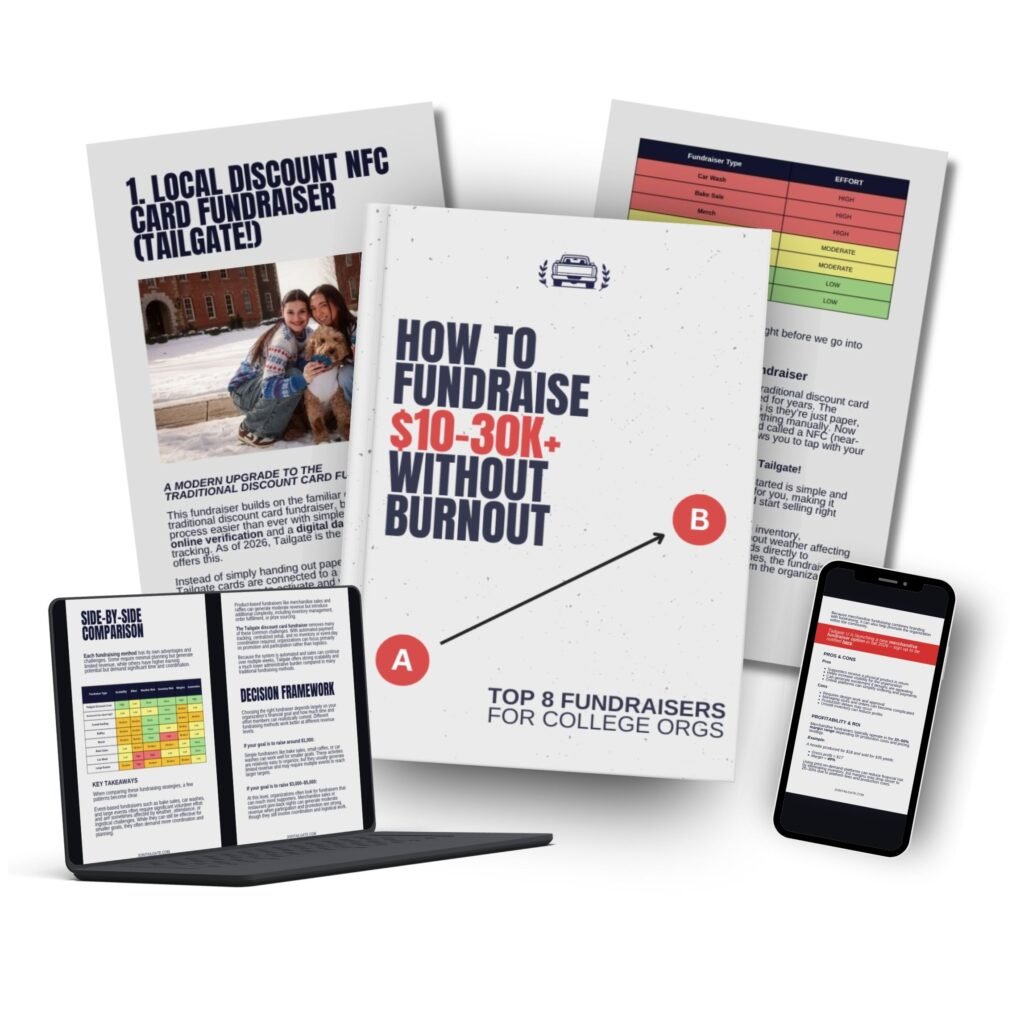
How to Fundraise $10K–$30K+ Without Burnout breaks down the 8 most common college fundraisers and evaluates them side-by-side so you can make smarter decisions.
- Which fundraisers require the most (and least) effort
- Realistic revenue potential for each option
- Which models actually scale to $10K+ goals
- Where most organizations lose time and momentum
What’s Inside
A Side-by-Side Breakdown of 8 Fundraisers
- Local discount card programs (including the modern tap-to-pay model)
- Restaurant give-back nights
- Peer-to-peer crowdfunding
- Raffles
- Merchandise sales
- Bake sales
- Car washes
- Large fundraising events (galas, tournaments, 5Ks)
Each option is analyzed based on:
- Effort required
- Profit margins
- Scalability
- Operational complexity
Real Numbers – Not Just Ideas
This guide goes beyond general suggestions and shows:
- Typical margin ranges (from ~20% to 95%+)
- Example revenue scenarios (e.g., how 500–1,500 sales translate into $5K–$15K+)
- Why some “easy” fundraisers cap out quickly
- Which models can grow with participation instead of being limited by time or capacity
A Clear Decision Framework
Instead of guessing, you’ll see exactly which types of fundraisers make sense based on your goal:
- Around $1,000
- $3,000–$5,000
- $10,000–$30,000+
This helps you avoid choosing a model that simply can’t reach your target.
Why This Matters
Many traditional fundraisers depend on:
- One-day events
- Weather
- Foot traffic
- A small group doing most of the work
That combination often leads to diminishing returns and member burnout.
This guide highlights alternatives that:
- Distribute effort across your team
- Run over multiple weeks instead of one event
- Scale with participation
- Reduce administrative workload
Who This Is For
- Student org leaders and fundraising chairs
- Club sports teams
- Greek life organizations
- Campus groups planning events or travel
- Anyone responsible for hitting a meaningful fundraising goal
Download the Guide
If you want a clearer path to raising $10K-$30K+ without overcomplicating the process, this guide will show you what actually works – and what to avoid.